
Wawasan & Inspirasi
untuk Perjalanan Anda
Artikel, panduan, dan insight dari para praktisi untuk mendukung pertumbuhan Anda.

Being In a Crowd, Yet Feels Lonely?
Have you ever feel you do not belong in a certain place? That although you are actually in the middle of a crowd, yet you feel totally alone? Your thoughts are playing clips of the lonely times, the friends whom you never talk to anymore, the loved ones who live in their own bubble, and on and on and on, then you decide to look at your handphone and entertain yourself in the attempt to forget everything.But, without you knowing, the old memories that you brought up, the feelings that attached to that were stored back automatically in your sub-consciousness, making these lonely feelings settled deeper and deeper in your heart.As you read this, try to imagine seeing yourself in this situation. See your self as the CCTV-person, watching yourself from a certain angle above you when you are sitting in public transport by yourself. Try to see how your face looks like, did you look happy? Were you smiling? Smiles will brighten your day, people say, and it is forever true. Try to remember people that have helped you on that day, the beautiful things you see on that day, the small little things that made you smile. Maybe, the chance to have this new day? A lot of people did not have that chance. Try to look around you and put your interest to other people. You may see one or even more things that you are thankful that you still have compared to others that share that rides with you. Don't let your mind pull you into a pit of loneliness. Reach out to someone, call your family, knock at your neighbor's house, starts a conversation with people. Buy a pet. Loneliness is not a reality. It is a situation that you LET YOURSELF into. As long as you are not leaving in some faraway jungle or on an exile there are opportunities to enjoy a company. Even being with yourself is fine from time-to-time, trust me, I am mom of three. Let's chat over a good cup of tea, a good start for friendship
 Kristina Ping

Bagaimana Memilih Pasangan Hidup Ideal
Tips menemukan pasangan idaman untuk pernikahan

7 Isu Orang Tua dan Cara Mengatasinya
Belajar menjadi orang tua yang paham tentang anak zaman sekarang.

Sulitkah Merintis Bisnis Sebagai Mahasiswa?
Impian dimana Anda bisa mendapat pekerjaan di sebuah perusahaan bonafid itu sudah berlalu. Generasi milenial kini adalah generasi entrepreneur.

Seberapa Ingin
Kalau dipaparkan dengan pertanyaan ini, ingatan saya akan kembali ke masa-masa awal terdiagnosa kanker payudara. Luar biasa besar keinginan saya untuk sembuh dan sehat. Rasanya keinginan itulah yang mendominasi pikiran saya saat itu. Karir dan pekerjaan yang sedang lumayan padat di depan mata luluh perlahan tanpa perlawanan, nyaris tanpa beban. Saya benar-benar tidak lagi memikirkan hal itu.Cerita ke belakang sedikit, setelah mendapat penjelasan panjang dan lebar, jelas dan detil dari dokter mengenai perjalanan treatment yang akan dihadapi, saya lalu mengkalkulasi waktu yang harus disiapkan untuk menjemput sang sehat. Dengan gagah, saya mengajukan pengunduran diri dari tempat saya bekerja, hanya karena ingin focus dengan terapi-terapi penyembuhan tersebut. Beruntung sekali saya, pengunduran diri ditolak, unpaid leave-pun tidak diindahkan oleh perusahaan. Saya diperbolehkan tidak masuk bekerja selama masa pengobatan nanti. Selanjutnya mulailah hari-hari terapi saya jalani dan selesai 1 tahun kemudian. Puji syukur, tahun ini adalah tahun ke 10 masa remisi kanker payudara saya.Kembali ke saat ini. Yang ingin saya ceritakan adalah ingatan saya saat menjalani terapi panjang yang boleh dibilang tidak nyaman, yaitu kemoterapi. Efeknya pada tubuh secara detil tidak perlu saya ceritakan. Yang pasti terapi ini adalah yang paling ditakuti dan sebagian pasien bahkan menghindarinya. Namun kala itu, saya menjalani kemoterapi dengan sukacita. Gambaran sukacitanya begini: saya ringan hati setiap melangkah ke rumah sakit, menunggu dan ingin sekali segera ketemu dokter untuk jadwal kemoterapi berikut-berikutnya. Dengan begitu, siklus terapi saya akan segera mencapai titik akhir. Itu jawaban dari pertanyaan “Seberapa ingin?” saya.-----Saya teringat cerita favorit tentang Rahasia Sukses dari Socrates. Suatu saat di masa itu, seorang murid bertanya kepada Socrates, “Bagaimana sebenarnya cara kita mencapai kesuksesan?”. Tanpa menjawab, Socrates lalu mengajak murid tersebut berjalan bersamanya menuju pantai. Dalam diam mereka berjalan bersisian di sepanjang pantai. Sang murid terus mengikuti sampai mereka mulai berjalan lebih dalam ke arah pinggir laut menuju ke tengah hingga mencapai batas pinggangnya. Tanpa diduga, Socrates memegang leher sang murid dan menenggelamkan kepalanya ke dalam air hingga ia kelabakan, sulit bernafas dan sekuat tenaga berusaha menyelamatkan diri dengan mengangkat tubuhnya ke atas. Dengan tersengal-sengal dan terkejut, murid itu bertanya, “Apa yang baru saja kamu lakukan?” Saat Socrates bertanya balik mengenai apa yang dia rasakan saat kepala dan sebagian tubuhnya ditenggelamkan ke laut, murid tersebut menjawab bahwa hanya ada satu keinginannya saat itu: menyelematkan diri dan hidup. Dengan ringan Socrates menjawab lagi bahwa itulah jawaban dari pertanyaan sang murid tentang misteri kesuksesan. Kita harus memiliki keinginan yang amat besar yang akan menjadi kekuatan kita.
 Madelina Mutia

Mengapa Manajer Perlu Belajar Coaching?
Penelitian menunjukkan bahwa coaching mengarah pada keterhubungan antar individu, produktifitas dan layanan konsumen yang lebih baik. Selain itu, coaching juga membantu karyawan meningkatkan performa kerja, mengatasi masalah dengan baik, mencapai goal aspirasi dan membangun kepercayaan diri.

Menemukan Karir Ideal
Pernahkah Anda berpikir untuk berganti pekerjaan atau merasa seperti terperangkap dalam pekerjaan yang tidak menyenangkan namun harus terus dijalani?

Langkah-Langkah Meditasi Sederhana
Langkah-langkah meditasi sederhana untuk kesehatan mental dan fisik yang lebih baik

5 Tren Utama Leadership yang Mengubah Dunia Organisasi
Ketahui 5 tren utama leadership yang berkembang di tahun 2020 dan selanjutnya

How Coaching Benefits a Coach (A Personal Reflection)
For coaches, this article lists some benefits throughout coaching sessions and provides a better understanding of the impacts of coaching to both coahees and coaches. For coachees, it illustrates a coach’s experience to enable them to better understand how a coach feels throughout coaching sessions and the importance of the experience for both coachees and coaches. Note: Coach – someone who coaches and delivers a coaching session by asking powerful and useful questions to provoke a coachee to gain awareness of his/ her situation. Coachee/ client – someone who is coached and asked questions so that he/ she can achieve his/ her personal and/or professional goals. ______________________________________________________________________________Coaching is a systematic process of a ‘thought-provoking and creative’ discussion between a coach and a coachee/ client that is aimed to achieve coachee’s certain goals, such as business, leadership, sales, or even love life, to enhance personal growth. Throughout the process, a coachee explores all possibilities in order to maximize one’s true potential so that the aims are achieved (Arsendatama, Coaching Indonesia). At the end of a session, it is very common to ask a client what one has gained from the discussion. However, as a coach, no one has ever asked me such a question, which makes sense because the focus has always been on the coachee. It got me thinking – what if I asked myself the same question. Surprisingly, no sooner had I done that than coaching led me to some wonderful journeys. A Journey to Self-DiscoveryIt is important to be ourselves, but it is crucial to know who we are. I remember one said self-discovery can only be achieved after spending some quiet moments with ourselves in silence. I am sure silence makes most of us uncomfortable. Imagine not talking and just looking at each other during a meeting; it might be eerie for some of us. On the contrary, in coaching sessions, it is necessary to make time to think, be present and be in silence. This is an important moment for coachees to digest questions or their own answers and for coaches to analyze the messages from the clients so that useful questions to provoke creative thinking can be created. And I, being the assertive me, failed to comply at first. I still do occasionally, but I persevere. Once a coachee asked me if I was in sales and marketing. I was dumbfounded thinking how he knew it - during my corporate tenure, revenues had been my target. He said my questions came in quite fast and he needed more time to digest the questions and information. What happened was I did not allow a silence period between questions or answers to enable absorption and this made the client felt that I was only focusing on the goal instead of his needs and the whole process. From that moment on I have given coachees undivided attention. In the state of presence, I am more aware of their needs and it is all right to let some silence between conversations. Sometimes all they need is to be listened to without interference. By listening actively, I have discovered that my intuition shows me what I need to say and what questions coachees need in order to trigger their awareness of their current situations, challenges, and potentials. My questions may not be powerful, but they are certainly useful looking at what my clients have benefited from coaching. Because of that, I have learnt to let my intuition guide me and combine the insights with my knowledge and experience. The collaboration is exemplary. Hence, silence is not as scary as I used to think for in silence I hear the truth, see the possibilities, and discover what I am capable of.A Journey to Self-Rejuvenation Psychologist Mihaly Csikszentmihalyi's (2008) research of "optimal experience" has disclosed that what makes a truly satisfying experience is a state of mindfulness called flow. Throughout flow, we normally experience profound enjoyment and creativity as we are so involved in life activities that nothing else seems to matter. In coaching, I should ‘dance in the moment’- let coachees discover themselves, deeply listen to their stories with activated intuition, and ask questions based on what just came up (Whitworth, Et.al, 2007). All in all, by being present, I enjoy the flow of the conversation even more as I really get the essence of the messages, and it does not matter where it leads me to as long as clients reach “optimal experience” - they get something useful from the discussion and achieve the goals that are set at the beginning of the session. During flow, they do have their ‘aha’ moments. Helping coachees reach their ‘aha’ moments provokes happiness, relief, and hope. Seeing them finally awake from their sleep and know what they need to do is happiness. I am happy for them and for what they have achieved at that moment. Witnessing their surprised faces when they realize they can move mountains brings relief and hope. Relief that they are able to see their situations from different angles and it also motivates me to tackle my own challenges. These emotions and feelings linger and I can never get tired of them because they somehow recharge my mind and soul. Slate (2001) claims rejuvenation enhances self-empowerment to live a richer, healthier, and happier life. Knowing I am part of such awakening empowers me to rejuvenate to live a more hopeful and fulfilled life for the best is yet to come.By and large, if a coach can benefit so much from coaching, imagine what a coachee will gain. Coaching does, profoundly, help self-discovery and growth. Throughout the process, I have revealed and restored myself. And for that I am forever grateful for the opportunities to meet and learn from some beautiful and wonderful people along my journeys. I believe nothing in this world can stop us from growing unless we stop trying and caring. ReferencesArsendatama, Al Falaq, MCC. Professional Coach Certification Program. Coaching Indonesia Academy. Csikszentmihalyi, Mihaly. 2008. Flow: The Psychology of Optimal Experience. Harper Perennial Modern ClassicsSlate, Joe H. 2001. Rejuvenation: Strategies for Living Younger, Longer & Better. Llewellyn Publications. Whitworth, Laura, Et al. 2007. Co-Active Coaching: New Skills for Coaching People toward Success in Work and Life. Davies-Black Publishing.
 Alexandria Tjai

7 Alasan Utama Bisnis Rintisan Gagal Berkembang
Pelajari 5 alasan utama penyebab pengusaha gagal di awal bisnisnya

Manfaat Yoga bagi Kesehatan Fisik dan Mental
Mengapa latihan yoga dianjurkan bagi semua kalangan terlepas dari usia mereka.

5 Ideas to Change Others
You can never change others, but you can inspire them too. When it comes to relationships, there is a common expectation that each of us wants to see our significant others be a better person. However, the truth is that if the focus of your relationship is to change your significant other you’re guaranteed to fail. Nobody can change others but themselves. Other people, whoever they are can only inspire or motivate the change to happen. Remember the last time you made changes in yourself. Is it you telling yourself that you needed to change? You told yourself probably after you listened to some advice, input, or feedback from other people. Or maybe after you listened to motivational speeches and videos, after reading inspiring quotes, articles, or books, or after experiencing a life-changing event? The need to change came from within after something or someone evoked your self-awareness, didn’t it? The same rule holds true for others. If you want to change others, change yourself first. Be the change you want to see in others. As Mahatma Gandhi once said wisely, “You must be the change you want to see in the world”. That is how you inspire others to change, by initiating the change that you want. Please note that it is ‘inspire to change’ not ‘to change’. So, if you’re longing for your significant other, your children, your best friend, your team members, etc to change, do this :1. List what changes you want to see 2. Decide why you want those changes to happen (the Why or the Drive)3. Decide why you want them to change (the Goals) - What’s in it for them – the benefits of changes for themselves? - What’s in it for you? - What’s in it for your relationship? - What’s in it for your performance?4. Then, start the changes in yourself. Let them see those changes in you. For example, if you want them to speak more gently to you, speak more gently to them first; if you want them to listen to you better, listen better to them first; if you want them to be more open to you, be more open to them first; if you want them to help you with your chores, help them with the tasks that matter to them, etc. 5. Communicate constantly to them what you’re doing, what you’re getting, and learning during the process, who you are becoming, and what you are feeling about the changes you’re making. Remember, actions speak louder than words, so walk the talk.However, the tricky thing is that if you don’t change yourself wholeheartedly, meaning that if your ultimate drive to change is not to make yourself better but to change others, you will also fail. Your intention should be pure. You want to change because you want to be a better version of yourself, a happier person who has a happier and more fulfilling relationship. If your significant others change because of that, it is a bonus. Good luck!
 Sri Erniati (R_nie)

Everyone is a Leader
Apa yang terlintas ketika mendengar kata pemimpin (leader)? Kebanyakan dari kita akan langsung mengasosiasikannya dengan sebuah posisi atau jabatan dalam sebuah organisasi atau perusahaan misalnya supervisor, kepala bagian, manajer, direktur, CEO, koordinator, ketua, pembina, pengawas, dan sebagainya. Intinya, mereka disebut pemimpin karena memimpin sebuah kelompok baik besar maupun kecil yang didalamnya berisi sekelompok orang. Maka ketika mendengar kata Leadership Coaching, sebagian besar orang mungkin akan langsung beranggapan bahwa ini adalah coaching yang semata-mata diperuntukkan bagi orang-orang yang punya jabatan sebagai pemimpin. Betulkah demikian?Leadership is Not a PositionKita tidak memerlukan sebuah jabatan untuk bisa melatih ketrampilan kepemimpinan kita. Kebanyakan orang menganggap bahwa kepemimpinan adalah sebuah jabatan, sehingga mereka tidak bisa melihat bahwa diri mereka sendiri juga adalah seorang pemimpin. Bukankah sebagai seorang pribadi, tanpa jabatan apapun, kita juga harus memiliki ketrampilan-ketrampilan seorang pemimpin yaitu pertama-tama harus bisa memimpin diri sendiri, mampu mengambil keputusan untuk diri sendiri, mampu menjadikan diri kita sebagai pengaruh yang baik bagi orang lain? Leadership Starts with YouJika kita tidak bisa memimpin diri sendiri dengan baik (lead oneself), akankah kita bisa memimpin orang lain (lead others)?Salah satu hal terbaik yang bisa kita lakukan dalam hidup kita adalah terus mengembangkan kemampuan kepemimpinan pribadi (personal leadership). Personal leadership adalah cara yang efektif untuk mengembangkan potensi kita, untuk mencapai hasil-hasil yang maksimal dengan cara yang lebih berkelanjutan. Hal ini karena personal leadership berfokus pada kesadaran pribadi (self-awareness) dan pada penggunaan kelebihan-kelebihan kita untuk mencari cara-cara yang efektif dalam menggunakan pikiran, tubuh dan emosi kita untuk mencapai hasil yang lebih baik dari waktu ke waktu. Melalui personal leadership, kita dapat mencapai tujuan kita tanpa merasa kelelahan secara mental.Dengan banyaknya tekanan di masa sekarang ini, kita semua memerlukan ketrampilan personal leadership untuk menjadi lebih sukses tapi juga lebih bahagia karena tidak merasa tertekan. Personal leadership adalah cara untuk menghemat waktu dalam mencapai tujuan tapi tetap dengan menikmati prosesnya.Personal leadership membantu kita membuka potensi diri dan memanfaatkannya untuk mencapai semua impian kita bahkan yang tidak terbayangkan sekalipun. Personal leadership mampu memperbaharui hal-hal yang membuat hidup kita lebih hidup. Intinya, personal leadership adalah tentang memimpin hidup kita sendiri dari dalam keluar (inside out). Jika kita ingin mendapatkan lebih banyak hal dari luar diri kita, mulailah memperbaiki apa yang ada di dalam diri kita terlebih dahulu.Leaders are Life-Long LearnersPara pemimpin terbaik adalah pembelajar sepanjang hidupnya. Ketika kita dapat memimpin diri kita dengan baik, dari dalam keluar, kita memperluas lingkaran pengaruh (circle of influence) kita pada orang-orang atau hal-hal disekeliling kita. Semakin luas pengaruh kita, semakin banyak pula hal yang harus kita pelajari agar semakin banyak hal pula yang bisa kita bagikan pada lingkaran pengaruh kita tersebut. Dengan sendirinya, kita telah menjadi pemimpin bagi orang lain juga bukan? Seperti kata John Maxwell, Pemimpin adalah Pengaruh.Lead by ExampleCara yang paling cepat untuk meningkatkan pengaruh kita adalah dengan selalu bertindak melakukan perubahan dalam hidup kita sendiri, berfokus pada hal-hal yang bisa kita ubah, yang berada dalam kendali kita. Jika melihat masalah, selesaikanlah. Jika melihat kesempatan, ambillah. Jangan menunggu orang lain melakukannya untuk kita atau jangan menunggu orang lain menyuruh kita melakukannya. Jadilah teladan, dan selalu melihat ke dalam diri sebelum melihat ke luar. Itulah jiwa seorang pemimpin, selalu penuh inisiatif. Dengan demikian, hanya setelah kita bisa memimpin diri sendiri dengan baik (lead oneself), barulah kita bisa memimpin orang lain (lead others) dengan baik pula.
Sri Erniati (R_nie)
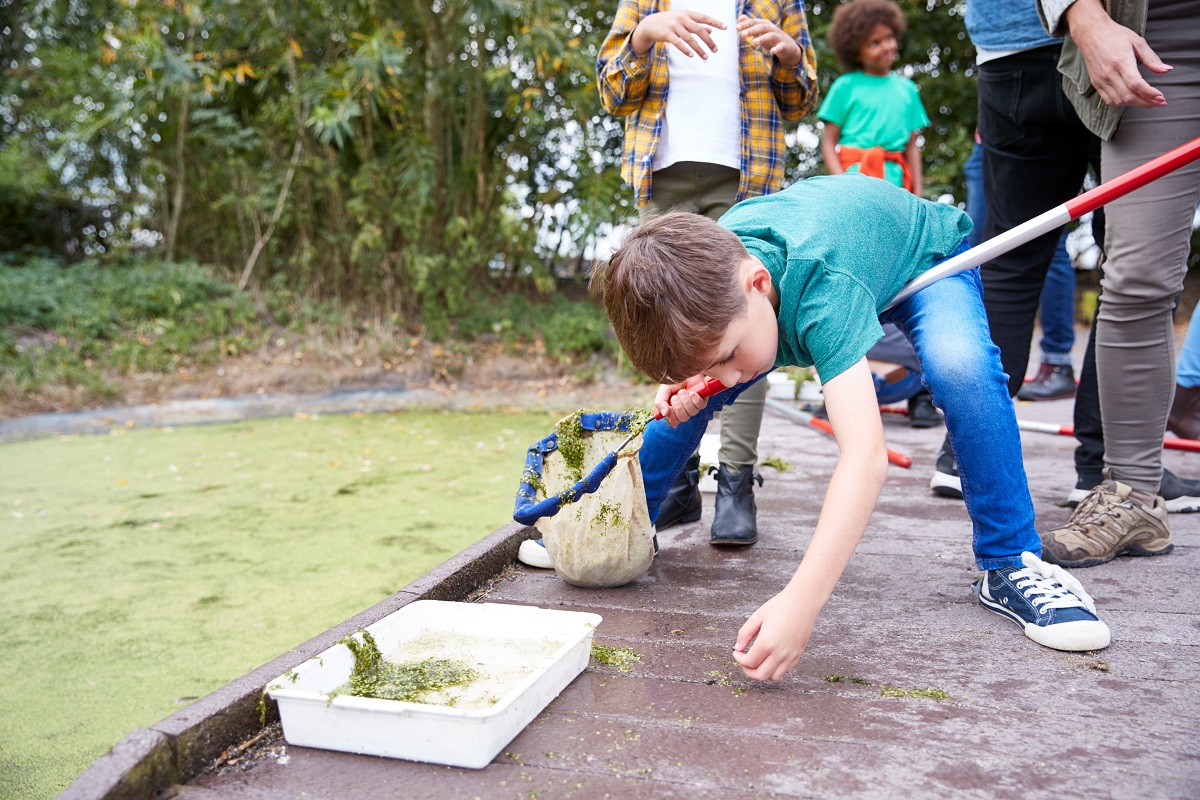
4 Gaya Belajar Anak yang Orang Tua Perlu Ketahui
Pentingnya mengetahui variasi gaya belajar anak di zaman sekarang.
 @DailyVisecoach